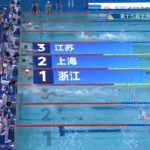
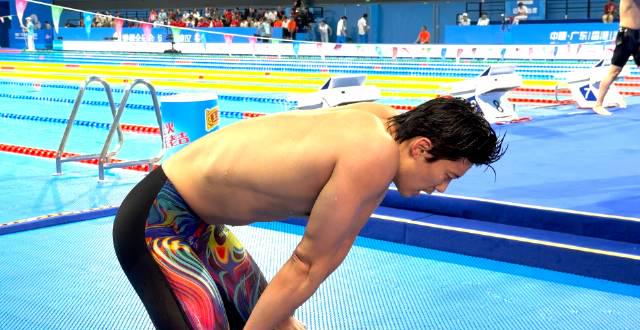
I was scrolling through my phone during my lunch break when I came across that video of Wang Shun – you know, the Chinese swimmer who just won the 400m individual medley at the National Games. The clip showed him completely spent, leaning against the pool edge, chest heaving like he’d just run a marathon underwater.
What got me wasn’t the victory itself, but that moment of pure exhaustion. His shoulders slumped, water dripping from his chin, eyes staring at something only he could see. It reminded me of my college days when I’d pull all-nighters for exams and emerge from the library looking exactly like that – completely drained but somehow satisfied.
My roommate back then was a competitive swimmer too. I remember visiting her at 5 AM practices, watching her slice through the water while the rest of campus slept. The chlorine smell would cling to her backpack for hours afterwards. She’d sometimes fall asleep during lectures, head nodding forward until her forehead touched the desk.
Watching Wang Shun’s post-race moment took me right back to those early mornings. The way his body seemed to surrender to gravity after the medal ceremony – it’s that universal athlete experience that transcends sports. You push your body to its absolute limit, and for a moment afterwards, you’re just… empty.
What most people don’t see is what comes before that exhaustion. The 4:30 AM alarms, the skipped family dinners, the hands so pruned from water they look like they belong to someone twice your age. My roommate used to keep a tally of kilometers swum on her dorm wall – by graduation, the numbers stretched from ceiling to floor.
There’s something beautiful about that kind of dedication, even if it ends in temporary collapse. Wang Shun’s victory came during the National Games’ swimming finals, but his exhausted expression told a story that went beyond medals and records. It was the face of someone who’d given everything and had nothing left to give.
I texted my old roommate after watching the clip. ‘Remember when you’d fall asleep in the cafeteria with a fork in your hand?’ She replied instantly: ‘Still do sometimes, but now it’s because of my toddler.’ Some things never change, whether you’re an Olympic athlete or just someone trying to get through the day.
That video of Wang Shun collapsing after his win stayed with me all afternoon. Not because of the gold medal, but because of that raw, human moment when the adrenaline fades and all that’s left is the truth of how much it cost. We’ve all had moments like that, haven’t we? That point where you’ve given everything and the only thing left to do is breathe?
How to Use Sixfast: A Quick Start Guide

Sixfast is a lightweight acceleration tool designed to optimize your internet connection for gaming, streaming, and other online activities. Here’s how to get started:
1. Download and Install
Visit the official Sixfast website and download the client for your device (Windows, macOS, Android, or iOS). Follow the instructions to install.
2. Sign Up and Log In
Open the app and register with your email or phone number. You can also log in using WeChat, Apple ID, or other supported platforms.
3. Redeem Free Membership with Code “666”
After logging in, go to the “Profile” or “Account” section and look for “Redeem Code” or “Gift Code.” Enter 666 to receive free VIP membership time—perfect for trying out premium acceleration features.
PC:

mobile:

4. Select a Game or App
Choose the game or application you want to speed up. Sixfast supports popular titles like Genshin Impact, PUBG, Honor of Kings, and more.
5. Choose Region and Start Acceleration
Sixfast will automatically recommend the best server based on your location, or you can manually select one. Tap “Start” to begin acceleration.
6. Enjoy Low Latency
Once connected, launch your game or app and enjoy smoother, faster performance with reduced ping and lag.
Try Sixfast today and level up your online experience!