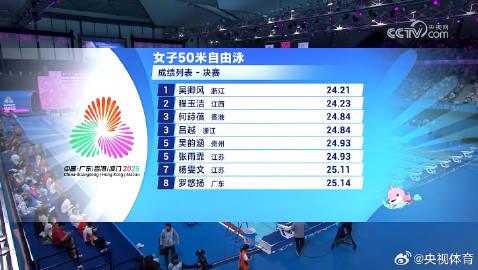
My cousin’s message popped up on my phone at 3 AM her time: ‘Just saw the news about Wu Qingfeng winning gold! But the video keeps buffering and then stops… I can’t even watch her full celebration properly.’
She’s been in Canada for three years now, working as a graphic designer in Vancouver. Yet every time there’s a major sports event back home – like these National Games – she goes through the same struggle. The pixelated videos, the endless loading circles, the ‘content not available in your region’ messages that make her feel like she’s missing out on pieces of home.
I remember watching Wu Qingfeng’s race myself – that powerful final stretch in the women’s 50m freestyle, clocking 24.21 seconds to claim her second gold of these Games. The pool water splashing in perfect arcs under the stadium lights, the roar of the crowd when she touched the wall first, the way she immediately looked at the scoreboard with that mix of relief and triumph.
But when I tried to send my cousin the full replay, all she got was 15 seconds of smooth footage followed by that dreaded buffering symbol. ‘It’s like watching a movie with someone randomly hitting pause,’ she complained. ‘I can see Wu’s smile when she realizes she’s won, then everything freezes right as she’s about to hug her coach.’
This isn’t just about sports, either. Last month during Mid-Autumn Festival, she wanted to stream that popular variety show everyone was talking about – the one with the mooncake-making competition. Two minutes in: ‘This content is not available in your current region.’ She ended up watching a grainy, subtitled version someone had uploaded to a different platform, the audio slightly out of sync the whole time.
There’s something particularly frustrating about being technically connected to everything yet functionally disconnected from the cultural moments that matter. When Wu Qingfeng stood on that podium, my cousin should have been able to see the national flag rising clearly, not through a stuttering stream that made the ceremony feel distant and broken.
She told me yesterday: ‘Sometimes I wonder if I’m missing more than just videos. It’s those shared moments – everyone back home watching the same thing at the same time, reacting together. By the time I finally get to see something, the conversation has moved on.’
So here’s to all the overseas friends trying to watch Wu Qingfeng’s gold medal moment, or any of those domestic events that suddenly feel so far away. That struggle to stay connected to home through screens that seem determined to keep you out? Yeah, we see you too.
How to Use Sixfast: A Quick Start Guide

Sixfast is a lightweight acceleration tool designed to optimize your internet connection for gaming, streaming, and other online activities. Here’s how to get started:
1. Download and Install
Visit the official Sixfast website and download the client for your device (Windows, macOS, Android, or iOS). Follow the instructions to install.
2. Sign Up and Log In
Open the app and register with your email or phone number. You can also log in using WeChat, Apple ID, or other supported platforms.
3. Redeem Free Membership with Code “666”
After logging in, go to the “Profile” or “Account” section and look for “Redeem Code” or “Gift Code.” Enter 666 to receive free VIP membership time—perfect for trying out premium acceleration features.
PC:

mobile:

4. Select a Game or App
Choose the game or application you want to speed up. Sixfast supports popular titles like Genshin Impact, PUBG, Honor of Kings, and more.
5. Choose Region and Start Acceleration
Sixfast will automatically recommend the best server based on your location, or you can manually select one. Tap “Start” to begin acceleration.
6. Enjoy Low Latency
Once connected, launch your game or app and enjoy smoother, faster performance with reduced ping and lag.
Try Sixfast today and level up your online experience!